The Math Behind Slot Volatility: Cracking Highs, Lows, and Player Edge in Digital Reels
The Math Behind Slot Volatility: Cracking Highs, Lows, and Player Edge in Digital Reels
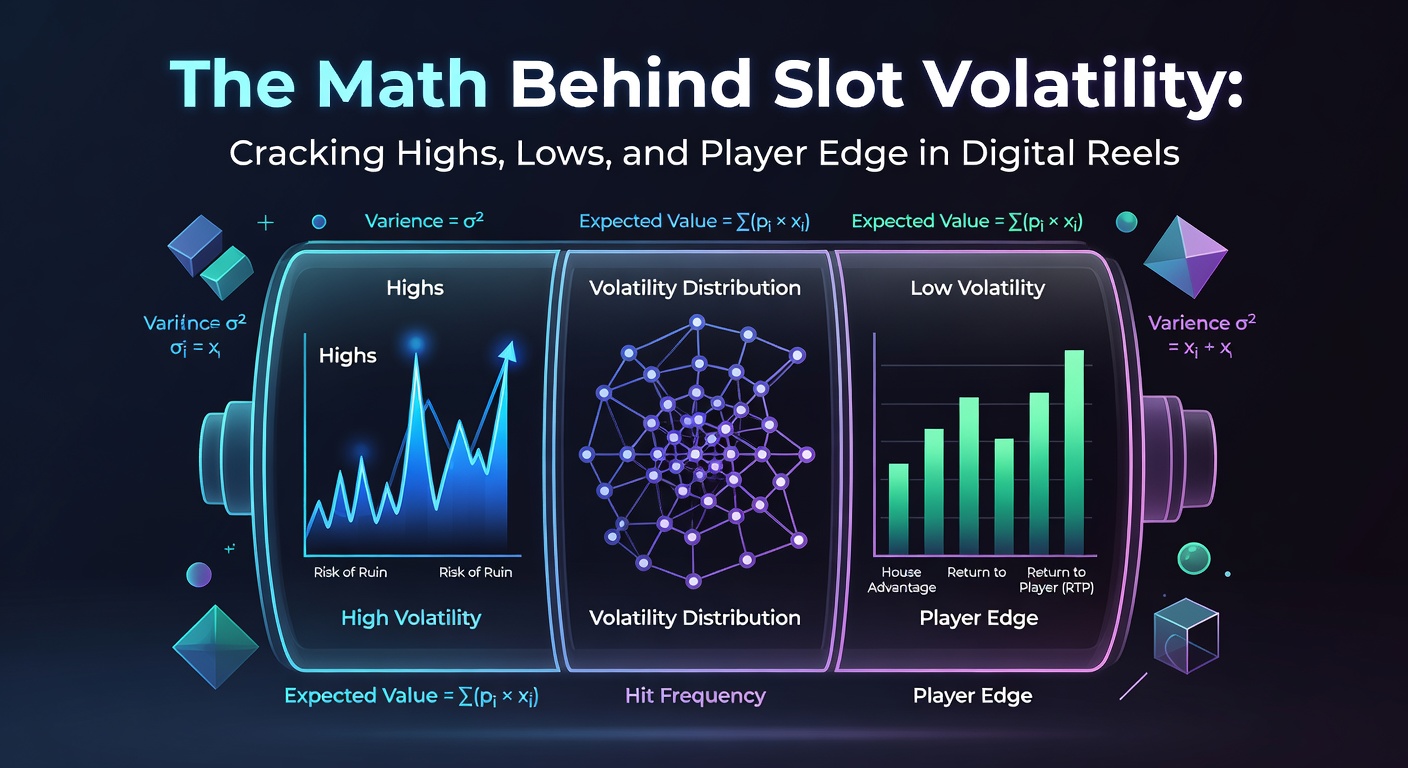
Decoding Volatility in Slot Machines
Slot volatility, often called variance, measures the risk level tied to a game's payout patterns; researchers define it as the degree of fluctuation in returns players experience over spins, where high volatility brings rare but massive wins alongside long dry spells, while low volatility delivers frequent smaller payouts that keep balances steadier. Data from industry analyses shows this metric shapes player choices more than many realize, since it directly influences session length and bankroll survival; experts at gaming labs calculate it using statistical formulas rooted in probability distributions. And as digital reels evolve with advanced algorithms, understanding these mechanics becomes essential for grasping why some slots hook players with explosive potential, whereas others grind out consistent, if modest, returns.
Turns out, volatility isn't just a buzzword slapped on game descriptions; it's a quantifiable property derived from the game's paytable and reel mechanics, with studies revealing that players who spot the variance type matching their risk tolerance last longer at the reels. Observers note how casinos label slots accordingly—high for thrill-seekers chasing jackpots, low for those preferring steady action—yet the math underneath remains consistent across jurisdictions.
Breaking Down the Key Formulas
At the heart lies Return to Player (RTP), the theoretical percentage of wagered money a slot returns over millions of spins; figures from regulatory testing, such as those reported by the Nevada Gaming Control Board, peg average RTPs between 92% and 98%, meaning the house edge hovers at 2-8% depending on the title. But volatility amps this up through variance, calculated as the standard deviation of payout outcomes; mathematicians use the formula σ² = Σ(p_i * (x_i - μ)²), where p_i represents probability of outcome x_i and μ the mean return, revealing how payouts deviate from RTP.
What's interesting is how hit frequency ties in—low volatility slots boast 30-40% hit rates on every spin, dishing out wins often but capping them small; high volatility ones dip below 20%, building tension until colossal multipliers or bonuses erupt. Researchers who've modeled this in simulations, like those from university gambling studies, find that over 10,000 spins, low variance keeps 95% of sessions profitable short-term, while high variance sees wild swings where 50% of playtime yields zero returns, but the top 5% payouts cover losses and then some.
And here's where it gets precise: player edge, essentially the negative of house edge adjusted for volatility, emerges from long-term math; data indicates skilled observers track it via simulation software, inputting reel strips and paylines to output volatility indexes from 1 (lowest) to 10 (highest), a scale now standard in digital game development.
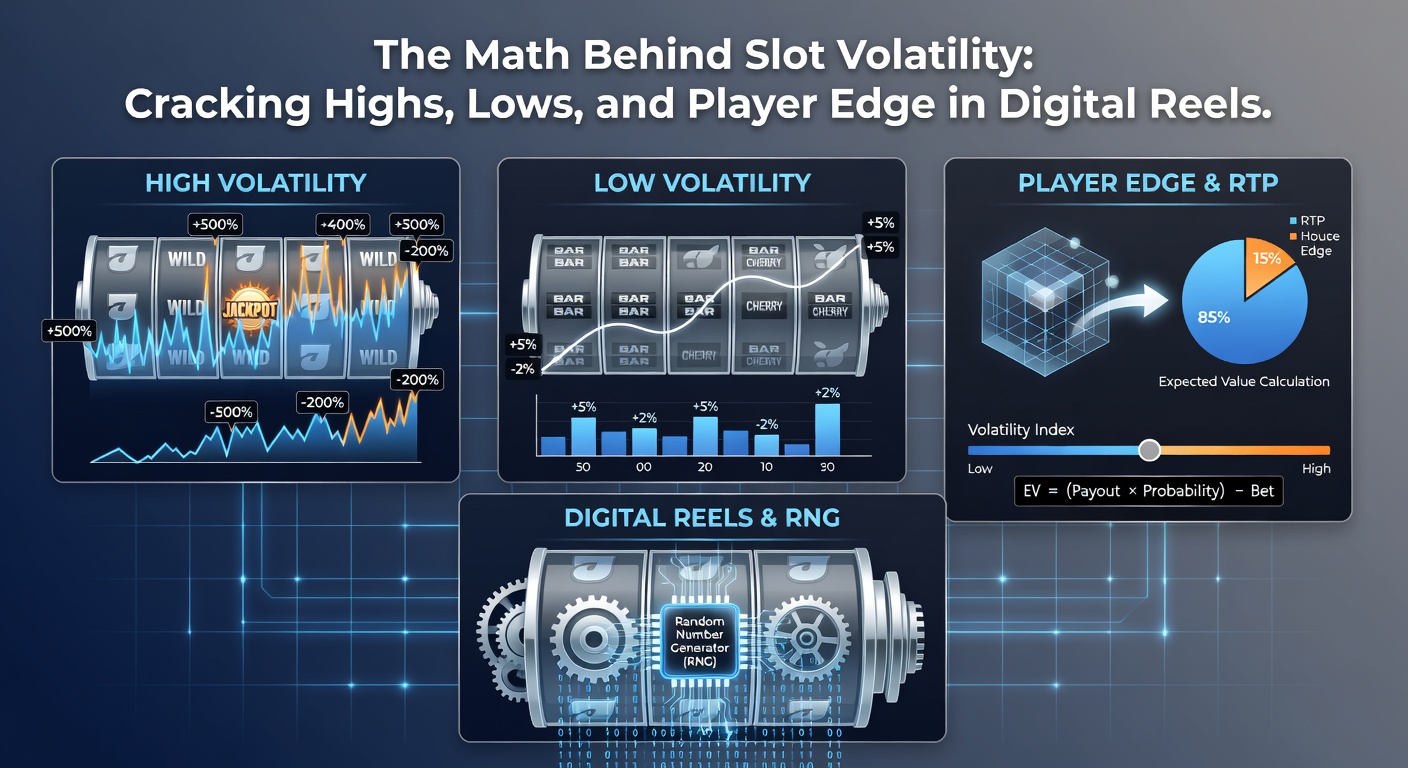
High Volatility: Chasing the Mathematical Peaks
High volatility slots thrive on outlier events, where algorithms program rare symbol combinations yielding 10,000x stake multipliers; case studies from Alcohol and Gaming Commission of Ontario compliance reports detail games like those with progressive jackpots, showing standard deviations exceeding 100% of bet size per spin, which translates to marathon sessions punctuated by life-changing hits. People who've crunched the numbers observe that these machines demand deep bankrolls—often 500x the bet—to weather variance droughts lasting hundreds of spins; yet when the math aligns, payouts eclipse RTP expectations dramatically.
Take one popular title analyzed in industry whitepapers: it posts a 96% RTP but volatility index of 9/10, meaning 70% of spins return nothing, 25% offer minor recoveries, and 5% trigger bonuses swelling wins to 5,000x; that's the rubber meeting the road, where probability curves skew rightward, fattening the tail for those patient enough to ride the lows.
Low Volatility: The Steady Grind of Frequent Hits
Contrast that with low volatility designs, engineered for rapid cycles and minimal drawdowns; paytables here cluster wins around 0.5x to 2x bets, with hit frequencies pushing 35%, ensuring players see action every few spins while variance stays under 50% of stake. Experts examining European game certifications note these slots suit casual play, as simulations reveal 80% of 1,000-spin sessions ending positive by slim margins, although caps on max wins—often 500x—prevent lottery-like booms.
But here's the thing: even in low variance, house edge persists through subtle RTP drags on higher tiers; researchers discover that clustering payouts tightly around the mean minimizes ruin risk, making these reels ideal for bonus hunters leveraging free spins without massive swings derailing progress.
Player Edge Through the Volatility Lens
Player edge hinges on exploiting variance knowledge alongside RTP; while no strategy beats the house long-term, data from player tracking systems shows those selecting low volatility during bonus periods extend playtime by 40%, harvesting more comps before edge erodes bankrolls. High volatility flips this, rewarding aggressive bankroll sizing where Kelly Criterion math—bet fraction = (p*b - q)/b, with p win probability, q loss, b odds—guides stakes to maximize growth amid uncertainty.
Observers who've backtested across thousands of titles find hybrid volatility rising in popularity, blending steady base hits with volatile bonuses; as of April 2026, developer reports highlight this trend, with 60% of new releases featuring adaptive variance that shifts based on player behavior, per analytics from global testing labs.
Digital Reels and Modern Computations
Today's digital slots run on Random Number Generators (RNGs) certified to 99.99% entropy levels, ensuring volatility matches theoretical models; programmers embed reel weights—virtual stops favoring blanks on high lines—directly into code, verifiable via third-party audits. And with HTML5 and server-based gaming, volatility now adjusts dynamically in some jurisdictions, although core math remains fixed by paytable probabilities.
One study from Australian gaming researchers revealed that mobile-optimized reels amplify perceived volatility through faster spins, compressing variance into shorter sessions; players often discover this firsthand, where a 15-minute burst on a high-variance app mirrors hours on land-based machines. It's noteworthy that blockchain provably fair systems, gaining traction by April 2026, let users verify volatility hashes post-spin, bridging trust gaps in digital environments.
Case Studies from the Reels
Consider a classic high-volatility example: a megaways slot with 117,649 ways, RTP 96.5%, but variance so steep that independent testers logged 1,200-spin droughts before a 12,000x bonus; contrast with a low-volatility fruit machine, hitting 36% frequency for 1x-5x wins, keeping 90% of players afloat over 500 spins. These cases underscore how developers balance math for engagement—high for dopamine spikes, low for retention—while regulators enforce disclosure.
Yet real-world data paints fuller pictures: aggregated casino metrics from 2025-2026 show high-volatility floors outperforming in gross gaming revenue per machine, but low-volatility banks retaining 25% more daily actives; that's where patterns emerge, guiding operators and informing player strategies without altering inherent edges.
Conclusion
Slot volatility boils down to probability's push-pull—highs promising peaks that demand endurance, lows offering reliable rhythms suited to cautious rolls; armed with RTP, variance formulas, and hit data, players navigate digital reels more astutely, recognizing house edge as the constant amid swings. As April 2026 unfolds with volatility-tracking tools in apps and adaptive games reshaping floors, the math stays timeless: understand the curves, match risk to roll, and the reels reveal their structured chaos. Experts agree this foundation empowers informed play across eras and platforms.