Tracing the Shift From Mechanical Odds to Algorithmic Systems in Slot Gaming and Fairness Standards on Varied Platforms

Slot machines began with physical reels and fixed payout structures in the late 19th century, yet the move toward electronic systems introduced new methods for determining outcomes. Early mechanical devices relied on gear ratios and spring tension to create unpredictability, while operators in land-based venues maintained oversight through physical inspections and regulatory checks by bodies such as the Nevada Gaming Control Board.
By the 1970s and 1980s electronic random number generators replaced gears with circuit boards that produced sequences based on initial seed values. These pseudo-random number generators used mathematical formulas to simulate chance, and manufacturers submitted their code for testing to ensure compliance with jurisdictional rules. Data from that era shows that payout percentages stabilized around 85 to 95 percent across many casino floors, though verification depended on periodic hardware audits rather than continuous monitoring.
Expansion Into Digital and Networked Environments
Online platforms emerged in the mid-1990s and required randomization techniques that operated without physical components. Software-based generators ran on servers and delivered results to player devices through encrypted connections. Regulatory frameworks in places like New Jersey and several Australian states demanded that operators publish return-to-player figures and submit algorithms for independent laboratory review before launch. Those reviews examined cycle lengths, seed entropy, and resistance to prediction attempts.
Mobile applications introduced further variables because devices themselves could influence timing and input. Developers adapted by combining server-side generation with client-side verification steps, allowing results to remain consistent regardless of connection quality. Figures released in industry reports indicate that mobile slot traffic surpassed desktop usage by 2024, prompting platforms to refine latency handling within their randomization pipelines.
Advances in Verification and Cross-Platform Consistency
Certification processes now include statistical sampling of millions of simulated spins along with cryptographic hashing that prevents post-generation alteration. Organizations such as the Gaming Laboratories International conduct these evaluations across multiple jurisdictions, and their findings feed into licensing decisions. Observers note that the same core algorithm can receive approval in one region while requiring parameter adjustments in another due to differing minimum payout thresholds.
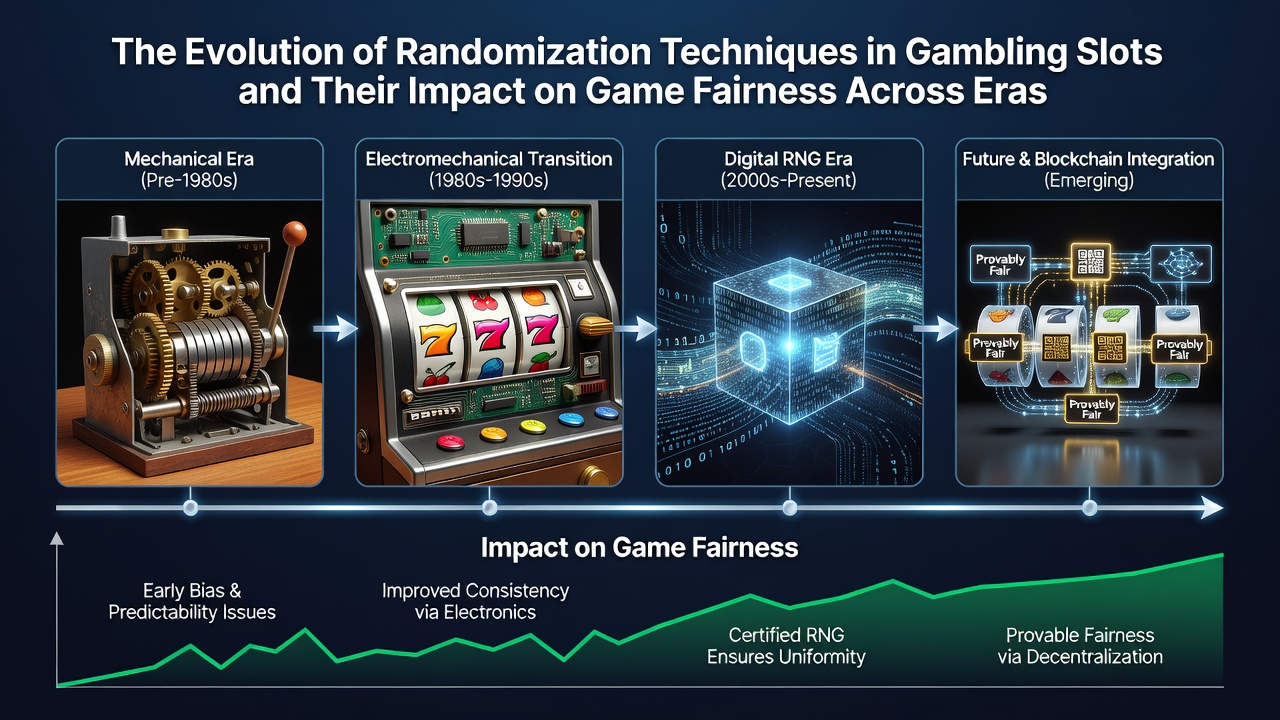
Blockchain-based approaches have appeared in some decentralized gaming environments where smart contracts record each outcome on a distributed ledger. Participants can verify individual results against the published seed, yet adoption remains limited because transaction speeds and regulatory acceptance vary. A 2025 study from researchers at the University of Nevada examined several ledger-based titles and reported that transparency improved player trust metrics in controlled tests, though overall volume stayed modest compared with traditional servers.
Live dealer integrations and hybrid formats blend physical ball drops or card shuffles with digital overlays, requiring synchronized timing between hardware sensors and software generators. Standards published by the Multi-State Lottery Association and similar groups emphasize that any hybrid system must isolate the physical randomness source from network manipulation risks. Testing protocols therefore include both environmental controls and digital checksum verification.
Regulatory Differences Across Regions and Device Types
Land-based terminals in North America often operate under hardware-specific rules that mandate sealed enclosures and on-site inspections, whereas online operators in Europe follow software-focused guidelines issued by the Malta Gaming Authority. These distinctions affect how frequently randomization components receive re-certification and how operators must report anomalies. Data compiled through 2026 shows that jurisdictions with quarterly reporting cycles identify irregularities faster than those relying on annual submissions.
Cross-platform play, where a single account accesses the same title on desktop, tablet, and smartphone, necessitates that the underlying generator produce identical statistical properties regardless of interface. Developers achieve this through centralized servers that ignore client hardware details and instead rely on standardized entropy pools. As of July 2026 several major suppliers have implemented unified certification packages that cover all three device classes under one audit umbrella, reducing duplication for operators.
Conclusion
The progression from mechanical unpredictability to sophisticated algorithmic and ledger-based systems reflects ongoing adaptation to new delivery channels and oversight requirements. Fairness verification has shifted from periodic physical checks to continuous statistical monitoring and cryptographic validation, with outcomes shaped by the specific rules of each licensing territory. Continued refinement of testing methods and reporting standards supports consistent player expectations across land-based, online, and mobile environments.